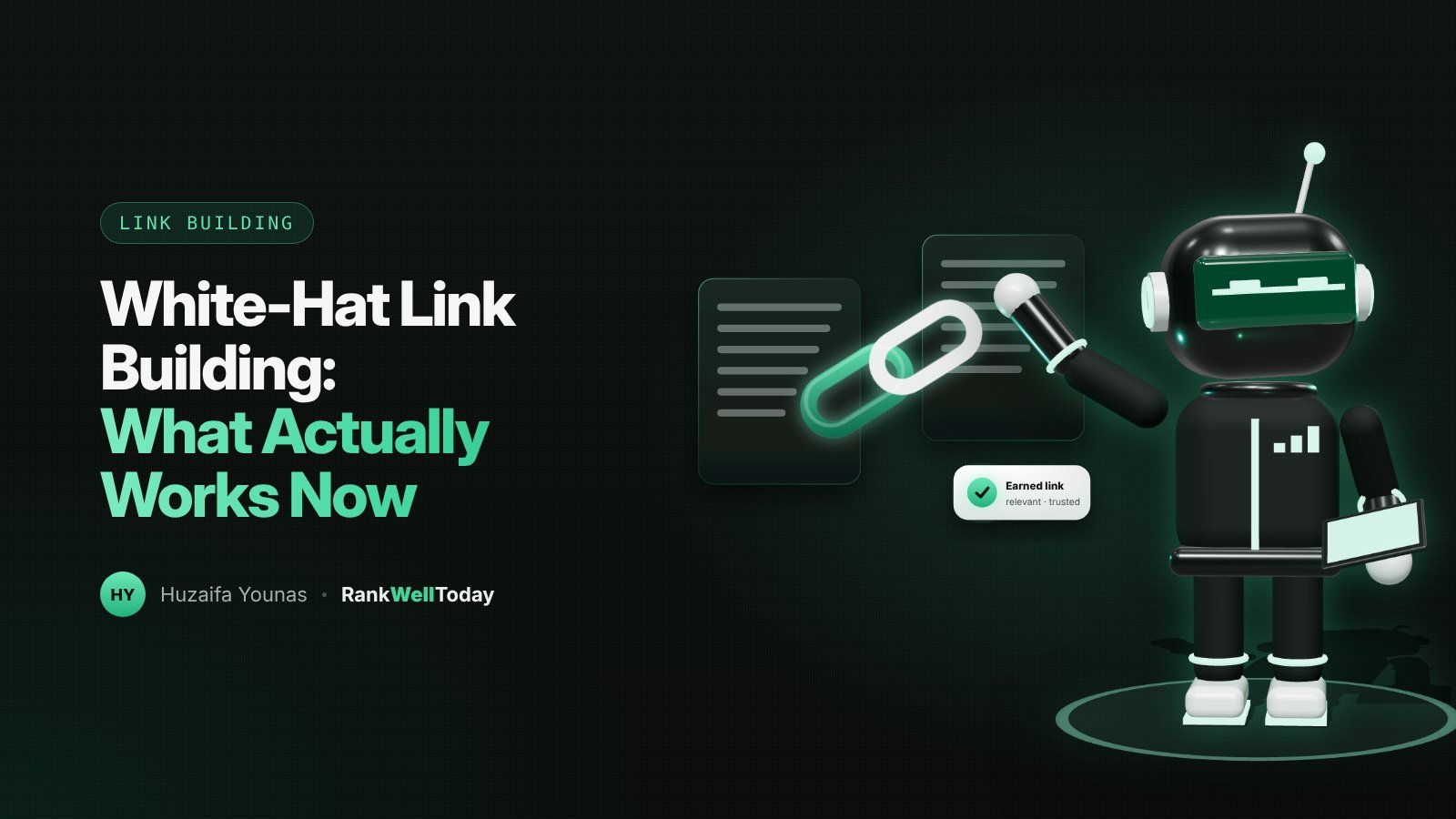
Links from other websites are still one of the ways Google judges whether a page deserves to rank. But the link building tactics that worked ten years ago, such as directories, article spinning and bulk link packages, now range from useless to dangerous.
This guide covers the white-hat tactics that still earn links today, how to tell a good link from a bad one, and the shortcuts worth avoiding.
Why links still matter
When a respected website links to yours, it's a signal that your content is worth referencing. Search engines use these signals, alongside many others, to decide which pages to trust. Links also send real visitors, and for many businesses a few links from the right industry sites bring valuable referral traffic on their own.
What makes a good link?
- Relevance: the linking site covers topics related to yours, and the link makes sense in context.
- Trust: the site has real readers, real content and a good reputation, not a site that exists just to sell links.
- Editorial: someone chose to link to you because it helps their readers.
- Placement: the link sits within the main content, not hidden in a footer with dozens of others.
One link from a respected industry publication is often worth more than a hundred links from low-quality sites.
7 white-hat tactics that still work
1. Create linkable assets
People link to things that are useful to reference: original research, data studies, free tools, calculators, templates and genuinely comprehensive guides. Ask yourself what your industry keeps citing and what's missing.
2. Digital PR
Turn your data, expertise or a timely angle into a story journalists want to cover. A good story can earn links from news sites and industry publications that would be impossible to get any other way.
3. Expert commentary
Journalists and writers constantly need expert quotes. Responding quickly and helpfully to relevant requests, with a real insight rather than a sales pitch, earns mentions and links over time.
4. Partnerships and real relationships
Suppliers, distributors, associations you belong to, events you sponsor and businesses you genuinely work with often have pages where linking to you makes sense. These links are relevant, trusted and often overlooked.
5. Unlinked brand mentions
Search for places where your brand is mentioned without a link. A polite note asking the writer to add a link, so readers can find you, often works because the mention already exists.
6. Broken link building
Find relevant pages that link to resources which no longer exist. If you have, or can create, a good replacement, let the site owner know. You're helping them fix a problem.
7. Relevant guest contributions
Writing a genuinely useful article for a respected publication in your industry still works, as long as the focus is on the audience, not the link. Avoid sites that publish anything for a fee.
The shortcuts to avoid
Google's spam policies specifically call out link schemes. These tactics can lead to your links being ignored, or to your site losing rankings:
- Buying links that pass ranking value, including "sponsored posts" without a sponsored or nofollow tag.
- Private blog networks (PBNs): groups of sites built purely to link to clients.
- Large-scale link exchanges ("you link to me, I'll link to you").
- Automated links from forum profiles, comments and low-quality directories.
- Cheap packages promising hundreds of links a month.
If an agency offers any of these, read How to Choose an SEO Agency: 9 Red Flags before signing.
Start with content worth linking to
Outreach is much easier when you have something good to share. Before you contact anyone, make sure your site has pages that deserve links: expert guides, original data, clear explanations of difficult topics. A well-planned topic cluster gives you both the content and the internal links to spread that authority across your site.
How to measure link building
- Track the number of new referring domains (unique websites linking to you), not the raw number of links.
- Check the relevance and quality of each new linking site.
- Watch rankings and traffic for the pages you built links to.
- Keep a record of every link you earned, and how, so you can repeat what works.
Expect steady progress rather than a sudden jump. A few strong, relevant links each month, earned consistently, will do far more for your site than any shortcut.