Many business blogs are a collection of unrelated posts written whenever someone had an idea. Each post might be fine on its own, but together they don't add up to anything. Search engines struggle to see what the site is really an expert in, and visitors read one page and leave.
Topic clusters fix that. They're a simple way to plan content so every page supports the others, and so your site builds real authority on the subjects that bring you customers.
What is a topic cluster?
A topic cluster has two parts:
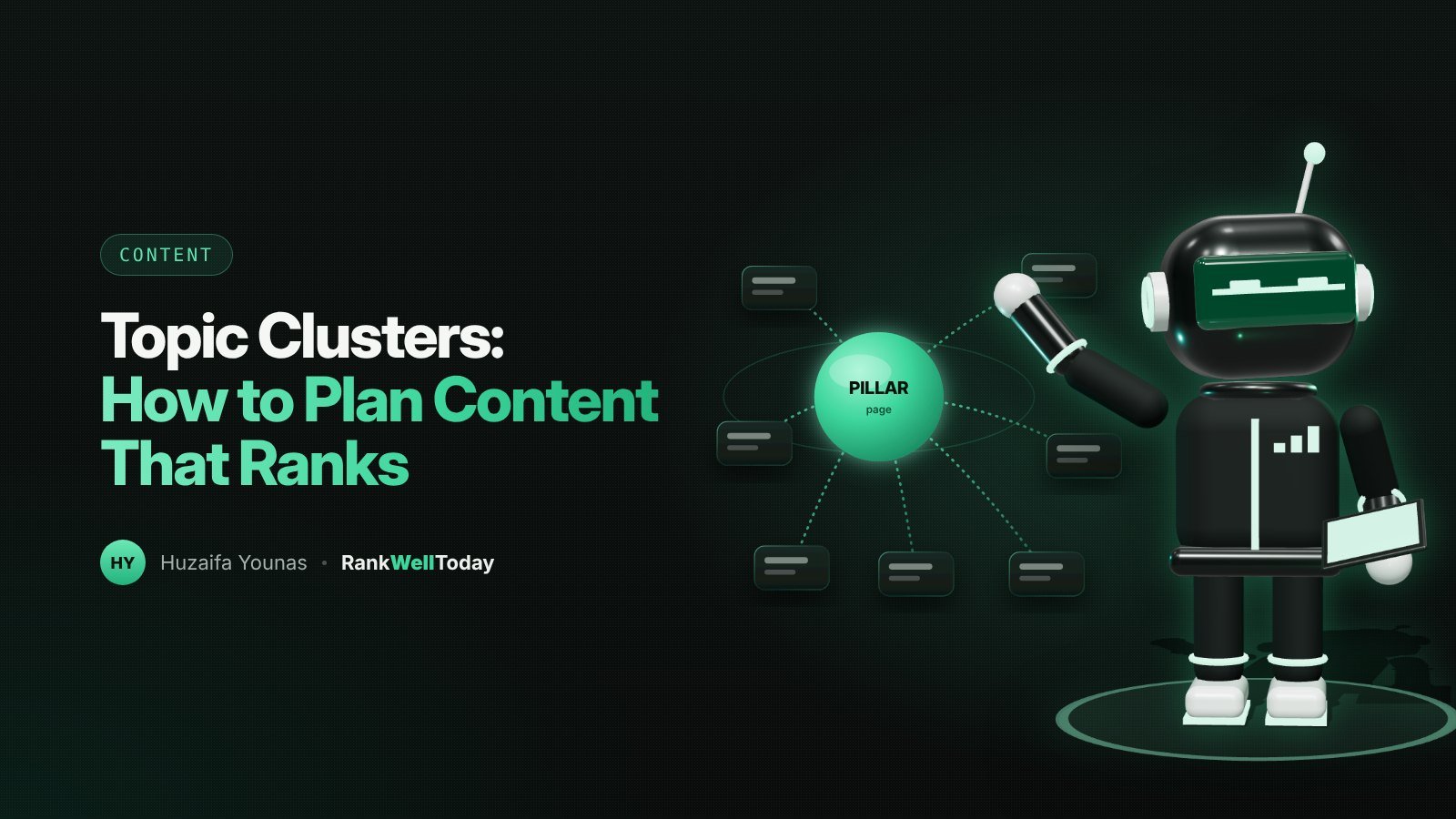
- A pillar page: a comprehensive page covering a broad topic, such as "Local SEO" or "Kitchen Renovation".
- Cluster pages: more detailed pages that each cover one specific subtopic or question in depth, such as "How to get more Google reviews" or "Kitchen renovation costs".
The pillar links to every cluster page, and every cluster page links back to the pillar and to related cluster pages. The result is a tightly connected group of pages that covers a subject thoroughly.
Why topic clusters help you rank
- Topical authority. Covering a subject in depth signals that your site is a reliable source on it, not just a site with one page about it.
- Better internal linking. Links between related pages help search engines discover and understand your content, and pass authority to the pages that matter most.
- More ways to be found. Each cluster page can rank for its own specific searches, catching people at different stages of their research.
- Better experience. Visitors can move naturally from a broad overview to the detail they need, which keeps them on your site longer.
- AI visibility. Clear, well-organised content that answers related questions is easier for AI tools to understand and cite. See How to Get Your Brand Cited in AI Answers.
How to plan a topic cluster in 5 steps
Step 1: Choose a pillar topic that matters to your business
Pick a topic that's broad enough to have many related questions, but closely tied to what you sell. For an accounting firm, "small business tax" works. "Finance" is too broad, and "VAT deadline for March" is too narrow to be a pillar.
Step 2: List the questions your customers ask
Gather subtopics from your sales calls and customer emails, the "People also ask" boxes in Google, keyword research tools and your competitors' content. Write down every question and subtopic you find.
Step 3: Group and prioritise
Group similar questions together. Each group should become one cluster page. If two questions have the same answer, they belong on the same page. Then prioritise based on search demand, how close the topic is to a buying decision and how hard it will be to rank.
Step 4: Map each page to one main search intent
Every page should have one clear job. Check what's ranking for your target search today. If Google shows guides, write a guide. If it shows product or service pages, a blog post probably won't rank. This step prevents several of your own pages competing for the same search.
Step 5: Plan the internal links before you write
Sketch the cluster: pillar in the middle, cluster pages around it, and the links between them. Decide where each page links to your service or product pages too, so the cluster drives enquiries as well as traffic.
A simple example
Here's how a cluster might look for a local plumbing company:
- Pillar: Emergency Plumbing: A Homeowner's Guide
- Cluster: What to do when a pipe bursts
- Cluster: How to turn off your water supply
- Cluster: Emergency plumber costs explained
- Cluster: Blocked drain: when to call a professional
- Cluster: Is a leaking boiler an emergency?
Each page links back to the pillar and to the company's emergency plumbing service page, so readers who need help now can book straight away.
Writing the pages
- Answer the main question in the first few sentences, then go into detail.
- Use descriptive headings that match how people phrase their questions.
- Add what only you can offer: real examples, photos, prices, mistakes you see customers make.
- Keep the pillar page broad and link out for detail, rather than cramming everything onto one page.
- Update pages when facts, prices or best practices change.
Common mistakes to avoid
- Starting five clusters at once. Finish one cluster before starting the next. A complete cluster beats five half-built ones.
- Writing for keywords nobody searches. Check demand before you write.
- Forgetting the links. Without internal links, it's just a pile of posts, not a cluster.
- Overlapping pages. Two pages targeting the same search usually both perform worse. Merge them.
Topic clusters take planning, and results build over months rather than weeks. If you're wondering what to expect, read How Long Does SEO Take?