"How long until we see results?" is the first question almost every business asks about SEO, and it's a fair one. You're investing real money every month, so you want to know when it starts paying back.
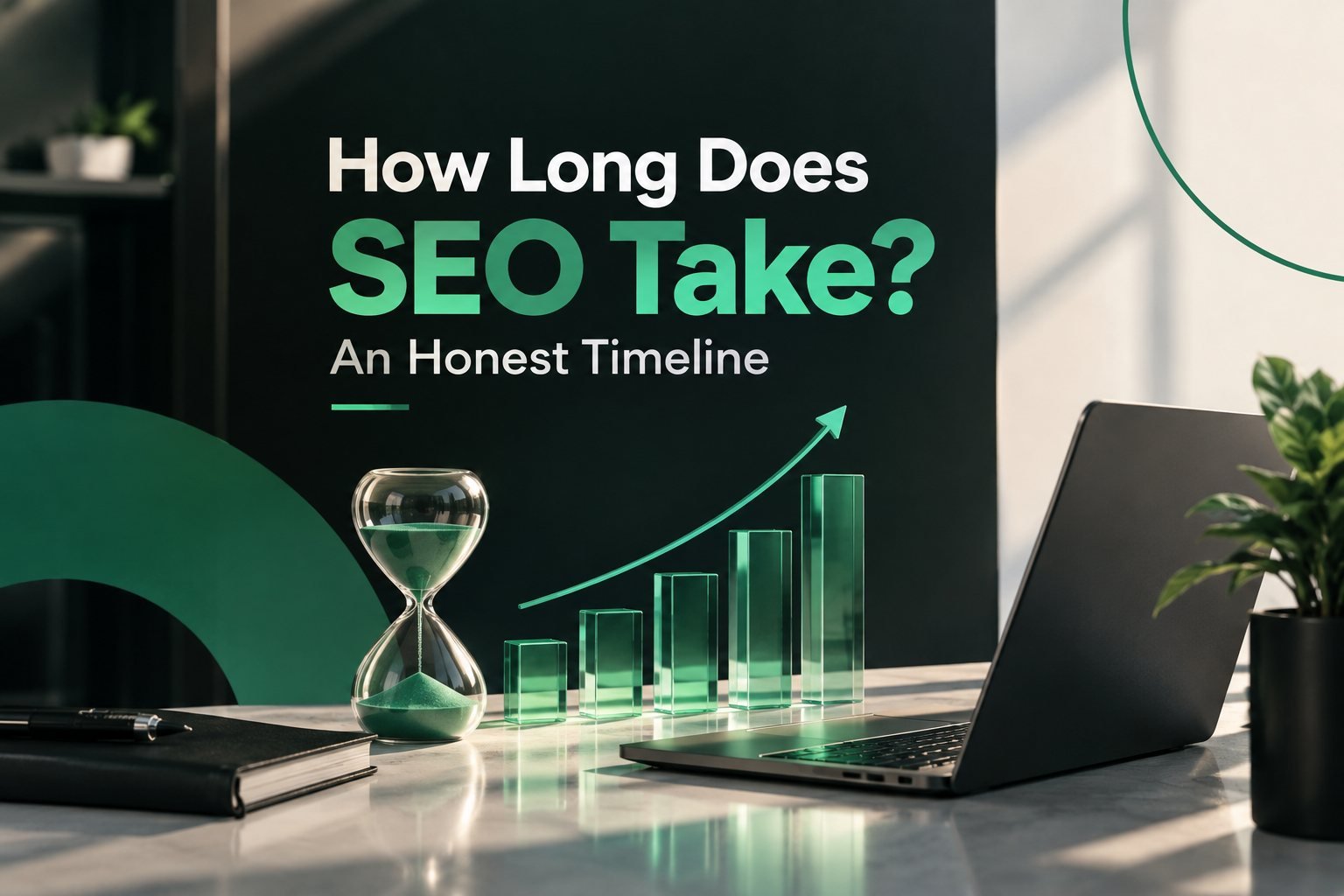
The honest answer is that SEO usually takes 3 to 6 months to show early progress and 6 to 12 months to deliver results you can feel in leads and revenue. Some sites move faster, some slower. This guide explains what actually happens in each phase, what changes the timeline, and how to tell whether things are on track.
The short answer: 6 to 12 months for real results
SEO is slow at the start because search engines need time to discover changes, re-crawl your pages and decide whether your site deserves to rank above pages that are already there. Rankings build on each other: once Google trusts a few of your pages, it becomes easier for new pages to rank.
That's why the curve usually looks flat for a few months and then starts to rise. It's also why SEO keeps working after you've done the work, unlike ads, which stop the day you stop paying.
What happens month by month
Months 1–2: Audit, strategy and foundations
The first weeks go into understanding your business, your customers and your competitors. A good team will run a full audit, research the keywords your customers actually use and agree a prioritised plan with you. Then the technical fixes start: broken pages, indexing problems, slow templates, missing titles, poor internal linking.
You may see very little change in traffic during this phase. That's normal. You're building the base everything else sits on.
Months 3–4: Early movement
Improved pages start getting re-crawled and re-evaluated. You'll often see impressions rise in Google Search Console first, then rankings creep up for longer, less competitive searches. New content starts getting indexed. This is the point where a good report should show leading indicators moving, even if leads haven't changed much yet.
Months 5–6: Traction
Pages that were sitting on page two or three begin to break into the top results. Clicks rise. For local businesses, Google Business Profile calls and direction requests often pick up around here too. Content published in the first months starts to earn its keep.
Months 6–12: Compounding results
With consistent work, rankings for more valuable, competitive keywords start to land. Traffic grows month on month, and that traffic turns into enquiries and sales. This is where SEO starts to look like a good investment rather than a cost.
Year 2 and beyond
Established authority makes each new page easier to rank. The focus shifts to expanding into new topics, defending positions and improving conversion rates. Many of the biggest wins come in the second year.
What makes SEO faster or slower
No two websites start in the same place. These are the factors that move the timeline the most.
- Age and history of the site. A brand-new domain has no track record, so it usually takes longer. A site that has existed for years but was poorly optimised often improves quickly once problems are fixed.
- Competition. Ranking for "plumber in a small town" is very different from ranking for "best CRM software". The more money competitors are investing, the longer it takes to overtake them.
- Technical health. If Google can't crawl or index your pages properly, nothing else works until that's fixed. Fixing big technical issues can produce some of the fastest gains.
- Content quality and depth. Thin pages rarely rank. Pages that answer the searcher's question better than anything else on page one do.
- Authority. Links and mentions from trusted, relevant websites still help Google decide who to believe. Earning them takes time.
- Consistency. SEO done steadily every month beats bursts of activity followed by silence.
- How fast changes get made. If recommendations wait months for a developer, results wait too.
Can you get faster wins?
Yes, within limits. Some changes can show results within weeks:
- Fixing pages that are accidentally blocked from Google or marked "noindex".
- Improving titles and descriptions on pages that already rank on page one or two but get few clicks.
- Updating older content that used to rank well and has slipped.
- Completing and optimising your Google Business Profile if you serve local customers.
- Adding internal links from your strongest pages to the pages you want to rank.
These quick wins are worth doing first, but they sit on top of the long-term work rather than replacing it.
How to tell if your SEO is on track
Because revenue lags behind the work, judge progress in stages:
- Months 1–3: Are issues being fixed and documented? Is the site being crawled and indexed properly? Are impressions starting to rise?
- Months 3–6: Are rankings improving for target keywords, even if they're not on page one yet? Are clicks growing?
- Months 6–12: Is organic traffic turning into enquiries, calls or sales? Is the cost per lead from SEO falling?
A good agency will report on all three levels in plain English and explain what they did each month and why.
Red flags: promises that are too good to be true
Be careful with anyone who promises:
- Guaranteed number-one rankings, or page one "in 30 days".
- Hundreds of backlinks for a low fixed price.
- Results without needing to touch your website or content.
Google decides rankings, and it changes how it ranks pages all the time. Shortcuts that seem to work quickly, such as buying links, can lead to penalties that take far longer to recover from than doing it properly in the first place. For more warning signs, read How to Choose an SEO Agency: 9 Red Flags.
The bottom line
Plan for SEO as a 6- to 12-month investment, with early signs of progress around month three. If you need leads tomorrow, pair SEO with paid ads while organic search builds up. And choose a partner who explains the timeline honestly, before you sign anything.